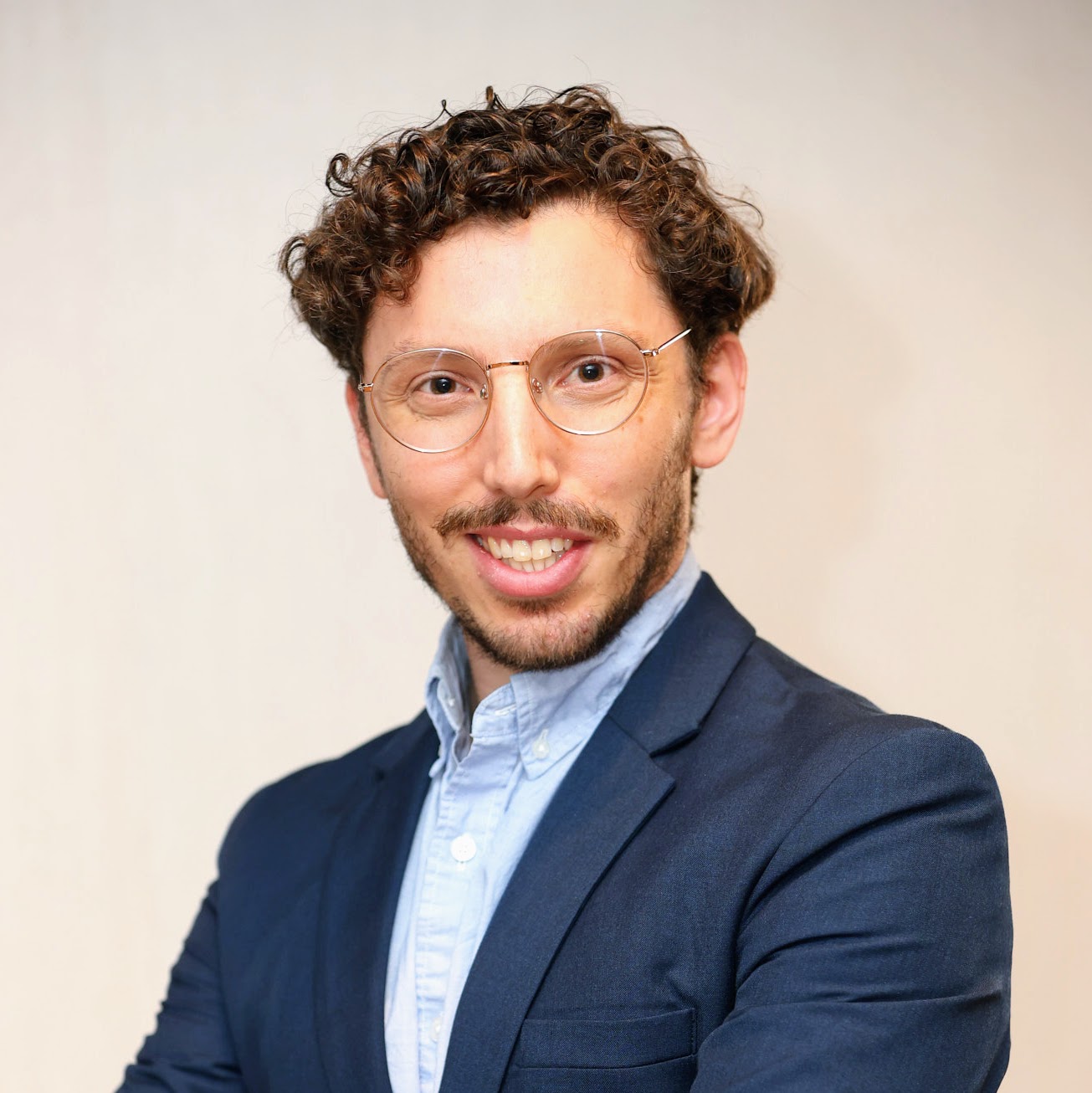
Welcome to my website! I am an applied microeconomist working at the intersection of environmental, health, and development economics. My research focuses on the health and human capital impacts of exposure to environmental harms. I also have work on the role of information frictions in economic development.
My undergraduate studies were in Economics and Religion (with a focus on Buddhist Philosophy) at Middlebury College. My senior thesis there focused on the role of partisan preferences in taxation and was published in the Journal of Public Economics. I studied abroad in Nepal as a college student and have ongoing fieldwork there as part of a J-PAL funded RCT.
Prior to UC Davis, I worked at Mathematica Policy Research for four years on a range of international development impact evaluations in global health, energy infrastructure, and social protection.
In addition to research, I enjoy inspiring students to see how economics can provide useful tools and models for analyzing issues like climate change, environmental justice, and income inequality.
Please click here to view my CV.
Research in Progress
- The Pollution–Productivity Curve: Non-linear Effects and Adaptation in High-pollution Environments (with Faraz Usmani) Draft available upon request
Show Abstract
Air pollution harms labor productivity, yet little is known about whether workers adapt to chronic exposure. We address this question using 14 years of individual-level performance data from India's premier cricket league, a setting characterized by some of the highest levels of particulate matter air pollution (PM2.5) and whose schedule and geography result in variation in both acute and chronic exposure histories. We pair these granular performance metrics with an India-specific machine learning data product that incorporates remotely sensed and ground-monitor measures of PM2.5. Our results reveal that both chronic and acute exposure to pollution are costly, but in different ways. A 10 microgram-per-cubic-meter increase in same-day PM2.5 concentration (half a standard deviation in our sample) reduces productivity by about 1 percent, with effects concentrated at the highest pollution levels, implying a nonlinear dose-response. The dose-response also exhibits surprising heterogeneity: same-day shocks harm those chronically exposed at the highest levels approximately 40 percent less than those with median exposure histories, indicating adaptation. Nevertheless, chronic exposure itself results in performance declines that, though smaller in magnitude than the declines resulting from same-day shocks, far outweigh any protective effect from adaptation. Our findings suggest that standard estimates from low-pollution environments do not capture the dynamics between acute and chronic exposure in high-pollution settings.
Invited Seminars: Indian Statistical Institute, Delhi; University of Massachusetts, Amherst
Conference Presentations: Association of Environmental and Resource Economists (AERE) 2025 Annual Conference; Occasional Workshop in Environmental & Resource Economics at UC Santa Barbara; University of Colorado Boulder Environmental & Resource Economics Workshop Got Goat? The Effects of a Digital Inventory Tool on Livestock Market Outcomes in Rural Nepal (with Travis Lybbert, Conner Mullally, Nick Magnan)
Conference Presentations: Agricultural and Applied Economics Association (AAEA) 2025 Annual Meeting
Funding: J-PAL’s Digital Agricultural Innovations and Services Initiative (DAISI)
Pre-Analysis Plan: AEA RCT registryEnvironmental Justice and the Costs of Accessing Clean Air: Experimental Evidence from California (with Shotaro Nakamura and Collin Weigel)
Conference Presentations: University of Chicago Advances with Field Experiments (AFE) 2025 Conference; UC Berkeley/Davis Giannini Foundation of Agricultural and Resource Economics Student Conference
Funding: California Air Resources Board
Pre-Analysis Plan: AEA RCT registry- Global Spillovers in Agricultural Technology Development (with Ashish Shenoy)
Education
- Ph.D. in Agricultural and Resource Economics, UC Davis (in progress)
- M.S. in Agricultural and Resource Economics, UC Davis, 2024
- B.A. in Economics and Religion (double major), Middlebury College, 2017
- Kathmandu University, Centre for Buddhist Studies at Rangjung Yeshe Institute, 2014-2015